
Tools
Four applications: one global balance sheet, and three tools for reading particular places in the US.
These applications sit behind the rungs of Products: the explorers under DIY, CivicStrata and SAMlytics under Remix, Corpusminder under Workspaces.
These are the working applications behind OconEco's research. Each one answers a different kind of question about a place, and each can be used on its own. Together they let you start from a county's balance sheet and work down to the neighborhoods, contracts and source documents that explain it.
Only FAND is global. It holds the same balance sheet for 237 countries and economies, and for US states and counties. The other three work with particular places in the US: CivicStrata goes neighborhood by neighborhood and was built and checked on Duval County, Florida; SAMlytics reads US federal contract notices nationwide; Corpusminder reads the documents behind any of them. Much of what they handle is words rather than tables, and where CivicStrata does use tables it ranks them into population-weighted bands (Q-Scores) rather than valuing them in dollars.
FAND says what a place owns and where it sits among places of like income per capita and population density. The other three bring the local evidence (what the documents say, who lives and governs there, which federal contracts are on offer) that helps explain a place's figures and answers the How and Why questions FAND does not. Such evidence enters FAND as text, an Exception to Expectations or a Direction for Further Work, never as a new indicator.
- FAND measures what a place owns, from nations down to counties.
- Corpusminder reads and organizes the documents the others rely on.
- CivicStrata shows who lives there and how it is governed, down to a few blocks.
- SAMlytics finds the federal contracts open to local businesses.
Pre-release. All four are in active development and shared by invitation while we test them with early users. Expect rough edges, and tell us what's confusing.
-
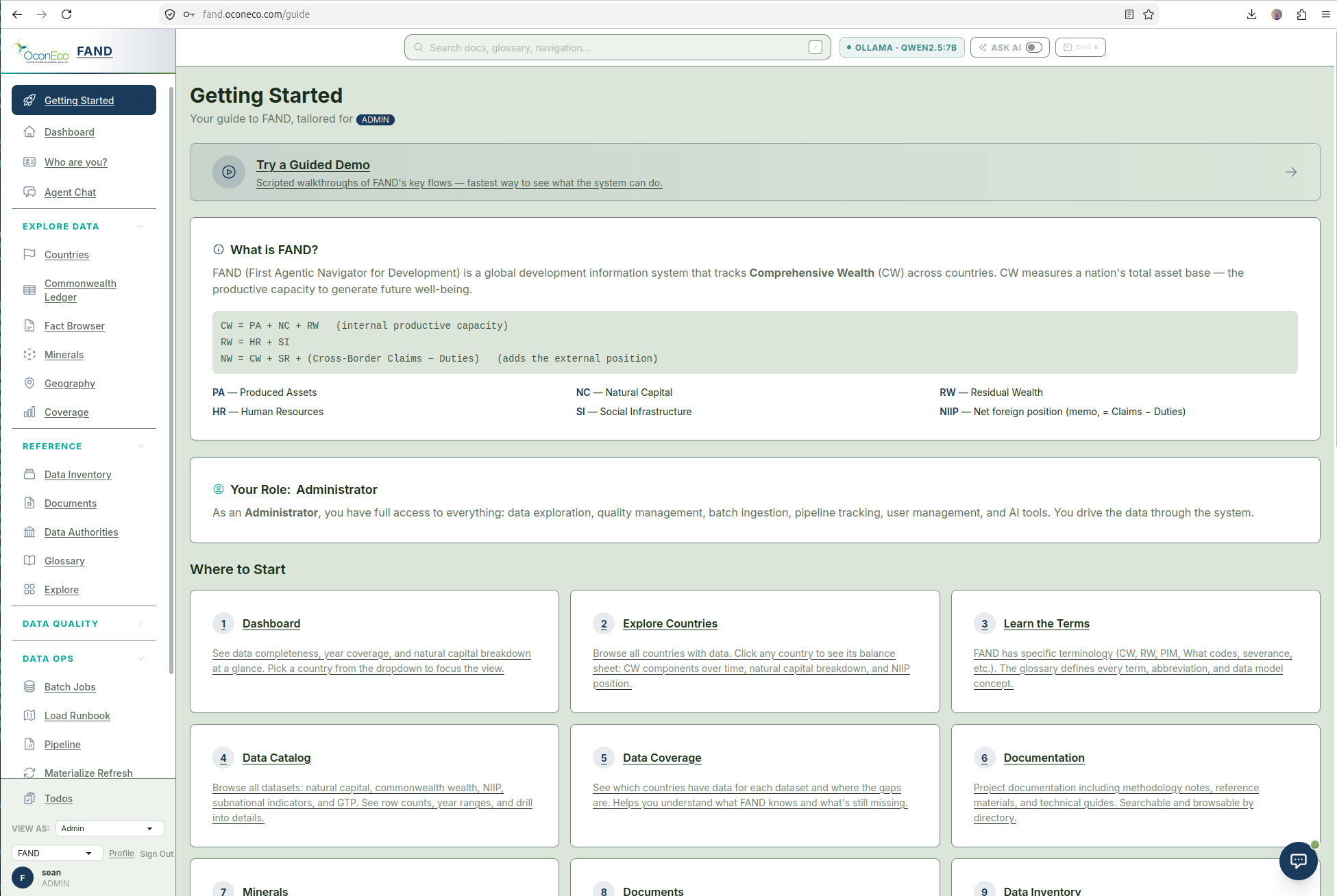
FAND Live
GDP says what a place earned this year; FAND shows what it owns (roads, farmland, forests, people's skills) and whether that stock is growing or being spent down.
FAND builds a balance sheet for a country, a US state or a US county: what it owns in buildings and machinery, in nature and in people's earning power, and what it owes the rest of the world. Compare places and see how the balance shifts over time.
For analysts, researchers and local leaders who want more than GDP.
-
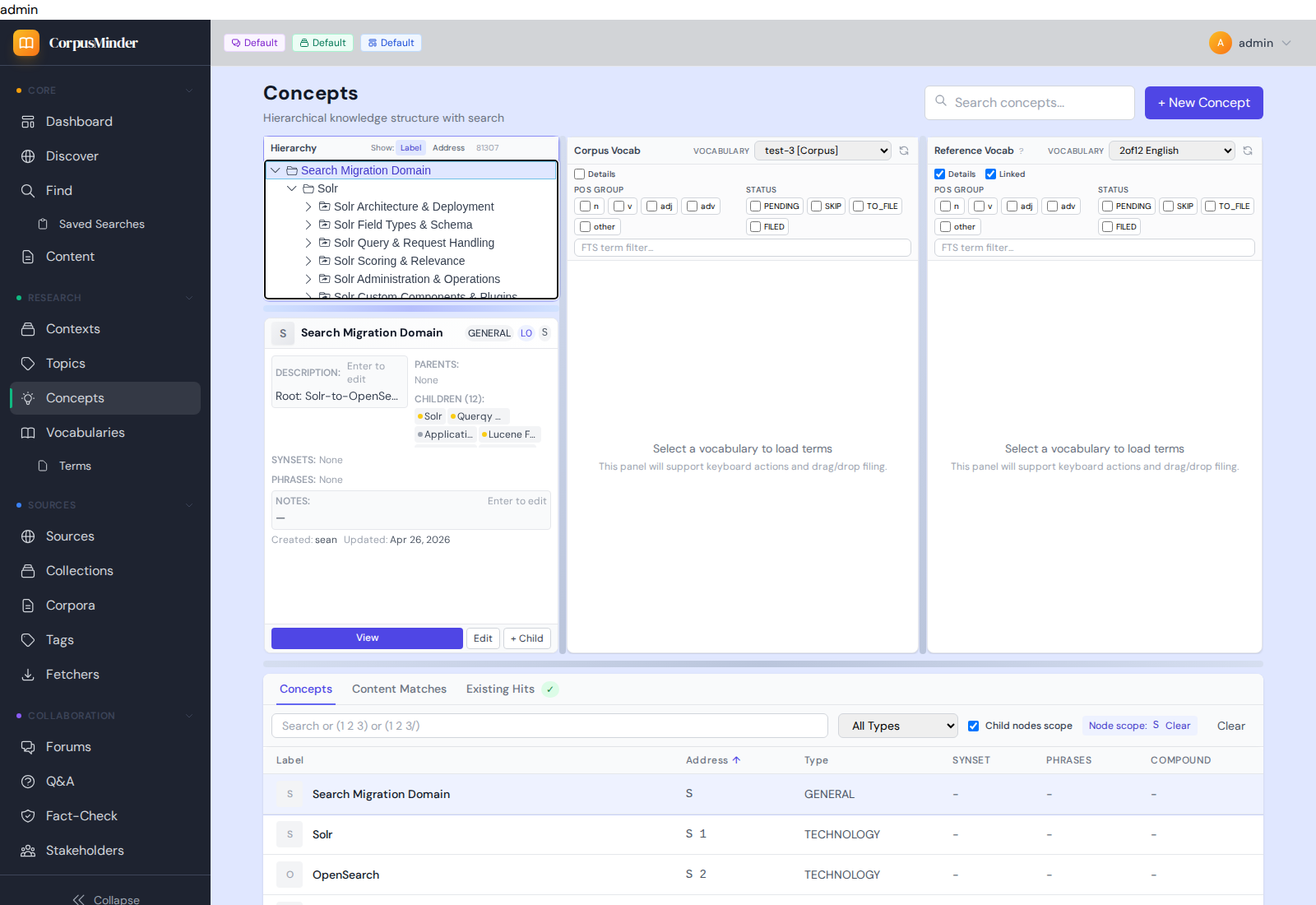
Corpusminder Live
Search a large pile of documents by meaning, and see exactly why each result matched.
Corpusminder reads large collections of documents, splits them into searchable pieces, and lets you search them by keyword or by meaning and by topic, with every result traced back to its source document and the rule that matched it.
For research teams who live in their sources. Easiest to see in a short walkthrough.
-
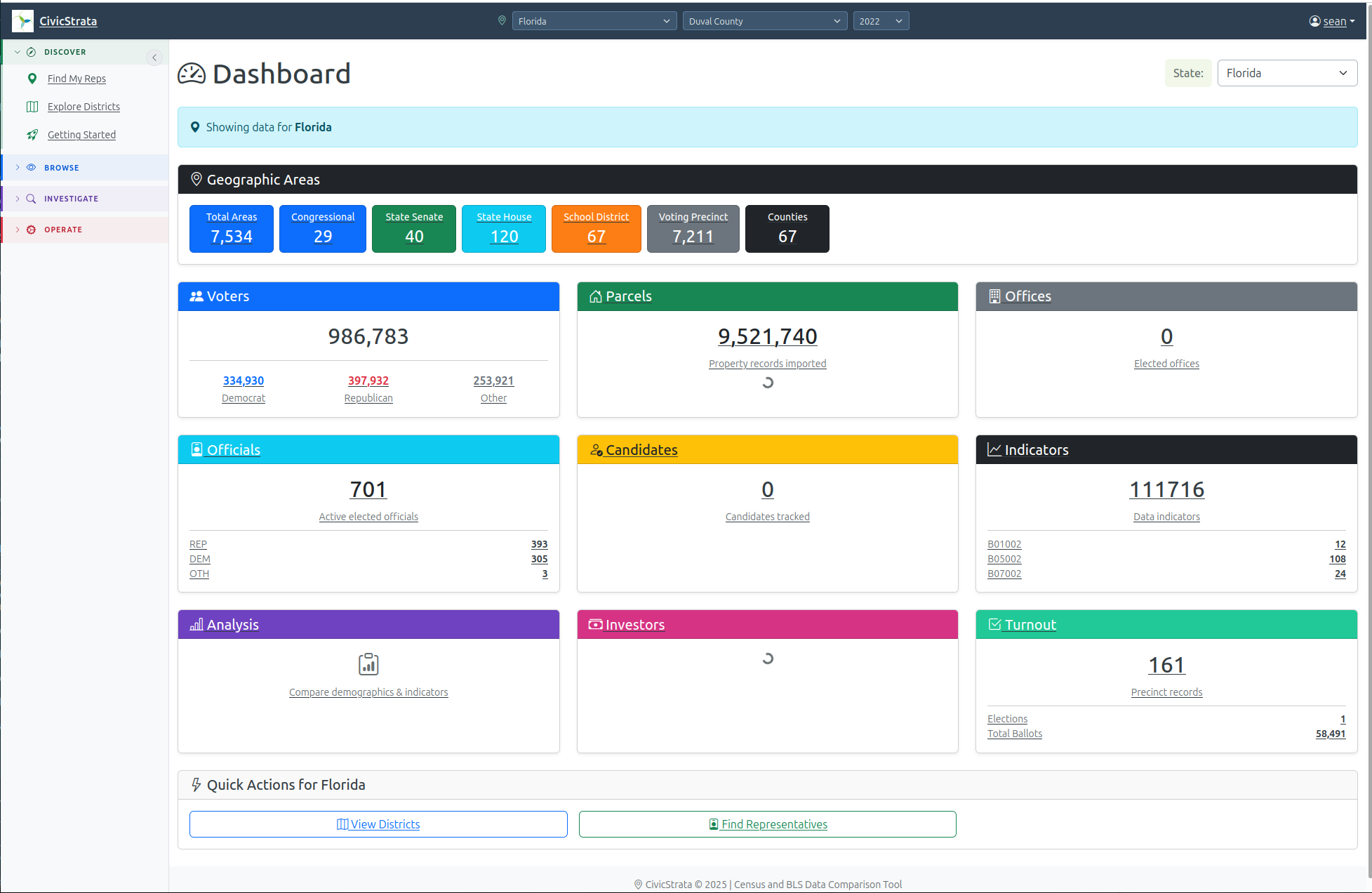
CivicStrata Live
Compare neighborhoods on public data, down to a few blocks, and see who governs them. Checked in depth on Duval County, Florida.
Rank neighborhoods against their neighbors on income, schooling and housing, then layer on health, flood risk, voter registration, property records, election results and the officials who represent each place. Built and checked in depth on Duval County, Florida.
For civic groups, researchers and campaigns working district by district.
-
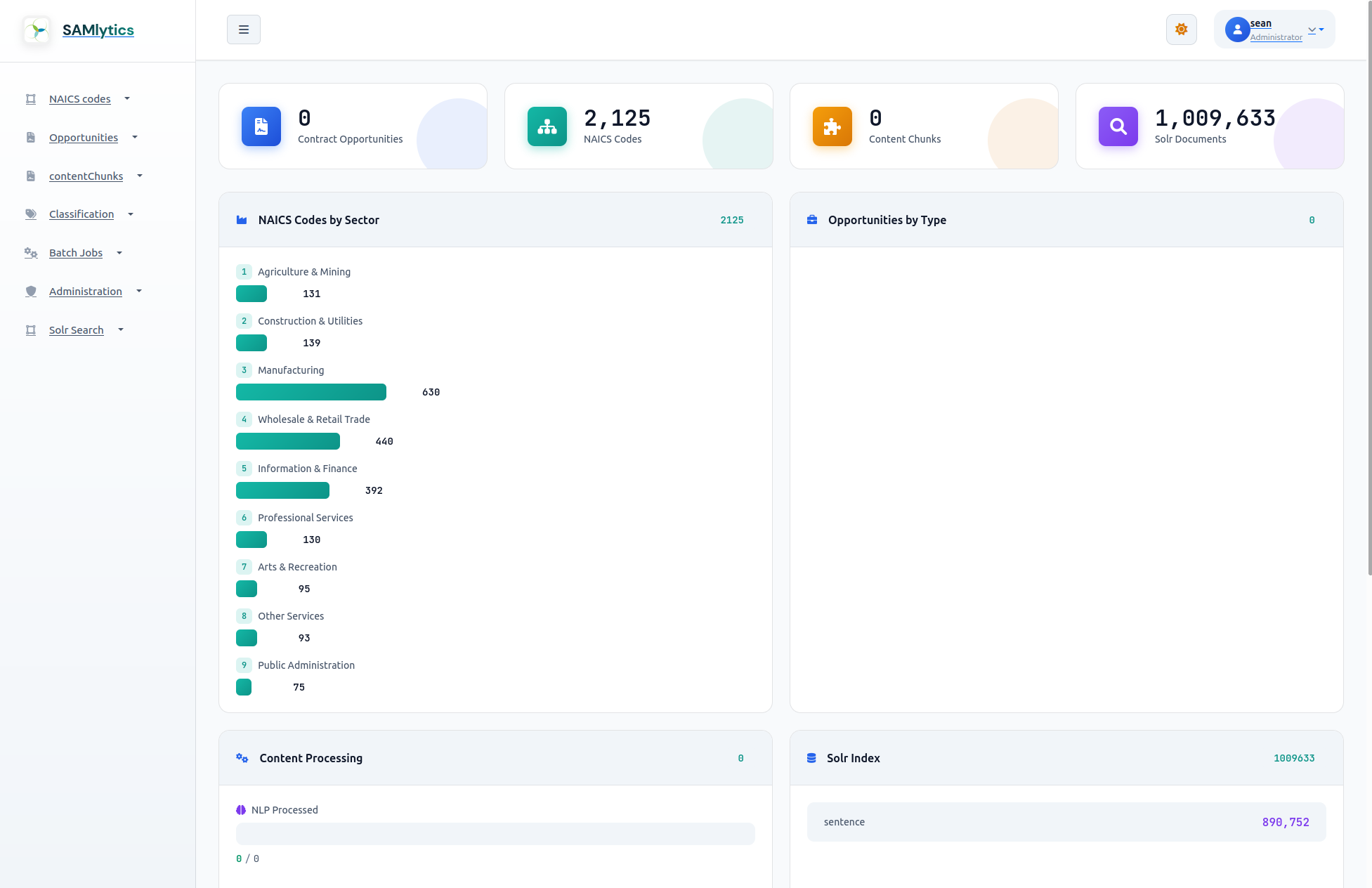
SAMlytics Setting up
Find the open federal contracts your business could actually win.
SAMlytics reads the daily list of US federal contract opportunities posted on SAM.gov, makes it searchable by industry, place, deadline and set-aside, and keeps a shortlist of open notices that fit one business's profile.
For contractors, economic developers and researchers sizing a federal market.
Each application is invitation-only during pre-release. Tell us which ones you'd like to try and we'll reply by email. Already invited? Each tool's page has an Open application link.
Request accessOne place, four tools: Duval County, Florida
Facts as of 14 November 2026; the app pages give the date of each figure.
- What does the county own? FAND builds balance sheets for about 3,149 US counties, so Duval County (Jacksonville) starts with what it owns in buildings and machinery, in nature and in people's earning power, set against other counties. County-level natural capital is still partial.
- Who lives where inside it? CivicStrata goes down to Duval's 581 populated block groups. It can compare Atlantic Beach, which is 8 of them, with the rest of the county on income, schooling and housing, and tell you which districts an address sits in and who represents it.
- Where could money come in? SAMlytics lets a local firm describe its industry codes and set-asides and keeps a shortlist of the open federal contract notices on SAM.gov that fit. Its database held 118,747 notices on 18 September 2026.
- What do the documents say? Corpusminder is built to read the planning documents, filings and minutes behind these numbers. Our development instance does not hold county documents yet; today it holds mostly the FAND library, 9,527 documents on 14 November 2026.
What the badges mean
Some demo pages carry a maturity badge. Each applies to that page and does not mean every figure inside it has the same status.
- Production: in regular use, with published outputs and a documented method; it still carries the caveats on its page.
- Experimental: provisional; the watermark travels with every export.
- Prototype: an early sketch of an idea, not a finished tool.